
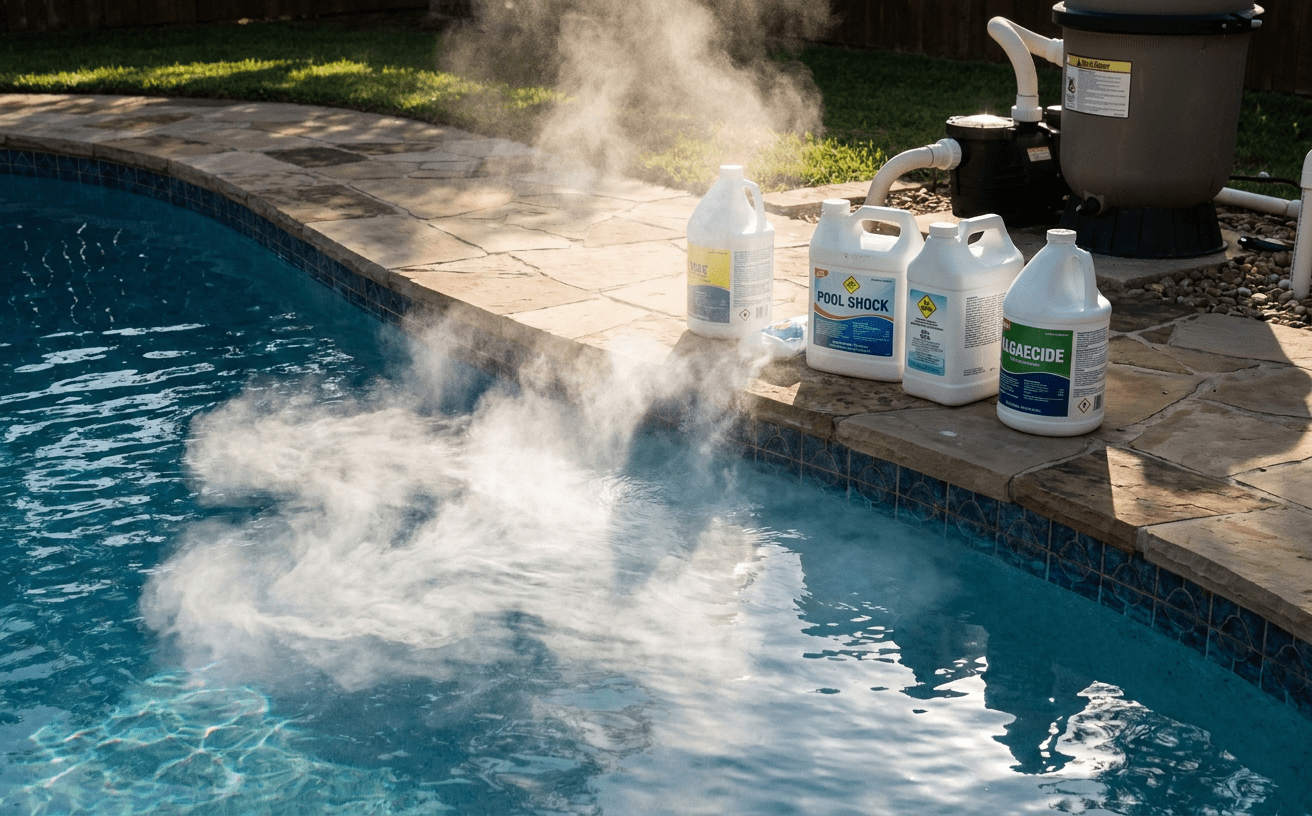
Shocking a pool is supposed to solve problems. But when you reach for the shock every few days without really measuring, the treatment starts becoming the problem itself. The water might look clear, but underneath the surface, the chemistry is quietly breaking down.
Over-shocking is one of the most common mistakes pool owners make, especially during the heat of summer when algae seems to appear overnight. The logic feels sound: more chlorine means cleaner water. But the reality is far more complicated.
Understanding what happens when chlorine levels stay too high for too long can help you recognize the warning signs before they turn into expensive damage.
How Over-Shocking Affects Your Water
When you add more chlorine than your pool can process, the excess does not just disappear. It lingers. Free chlorine levels climb well above the safe range of one to three ppm, sometimes reaching ten or even twenty ppm.
At these concentrations, chlorine becomes corrosive rather than sanitizing. It starts attacking the very surfaces and equipment it is supposed to protect. The damage is slow and often invisible until it reaches an advanced stage.
The Hidden Damage Inside Your Equipment
High chlorine levels are particularly harsh on metal components. Heater elements, ladder bolts, and light fixtures can develop corrosion and pitting. In saltwater pools, the cell itself may degrade faster than its expected lifespan.
Vinyl liners are also vulnerable. Extended exposure to high chlorine causes fading, brittleness, and eventual cracking. Once a liner starts to fail, replacement is the only option, and it is not cheap.
What a Shocked Pool Feels Like for Swimmers
The most immediate sign of over-shocking is swimmer discomfort. A shocked pool with chlorine levels above five ppm can cause burning eyes, dry skin, and an irritated throat. The chemical smell that many people associate with too much chlorine is actually caused by chloramines, which form when excess chlorine reacts with contaminants.
Children and people with sensitive skin are affected first. If your kids refuse to get in the water or complain of stinging eyes within minutes, test the chlorine level before assuming the water is dirty.
Swim suits fade faster in over-chlorinated water. Elastic degrades. Colors lose their vibrancy. If you are replacing swimwear more often than usual, your chlorine level may be the silent culprit.
How to Tell If You Have Gone Too Far
- Free chlorine reads above five ppm on a standard test
- Water feels harsh or sticky on the skin after swimming
- A strong chemical smell lingers even after the pump has been running
- Metal fixtures show early signs of corrosion or discoloration
- The vinyl liner appears faded or feels stiff to the touch
Any one of these indicators should prompt an immediate test. Two or more together suggest that over-shocking has been going on for some time, and corrective action is needed.
Bringing Chlorine Back to Safe Levels
The simplest way to lower chlorine is patience. Sunlight naturally destroys free chlorine, and in an outdoor pool, levels will drop on their own over two to three days if you stop adding chlorine and keep the pump running.
If you need to swim sooner, sodium thiosulfate can neutralize chlorine quickly. Add it in small, measured doses and retest after each addition. Be careful not to over-correct, because dropping chlorine to zero creates a different set of problems.
- Stop all chlorine additions immediately
- Test free chlorine and record the current level
- Run the pump continuously and expose the pool to sunlight
- Retest every twelve hours until chlorine falls below five ppm
- Resume normal dosing only when free chlorine is between one and three ppm
Building a Smarter Shock Routine
Shocking should be a planned event, not a panicked reaction. A properly maintained pool typically needs shocking once every one to two weeks, or after heavy use, heavy rain, or a visible algae outbreak.
Always base your shock dose on your pool volume and current chlorine level. Adding a standard bag without testing first is how most over-shocking incidents begin. Measure, calculate, then add.
Shock in the evening to give the chlorine the maximum amount of darkness to work through contaminants. By morning, the level should have dropped significantly, and the water should be safe for swimming by midday.
A pool that gets the right amount of shock at the right intervals stays clean without the collateral damage. It is not about more chlorine. It is about the right amount at the right time.
Keep a log of when you shock and what the chlorine reading was before and after. Over a few weeks, this log will reveal your pool’s natural chlorine demand pattern. Once you see the pattern, you can predict when a shock is needed instead of reacting after the water has already turned.
Prevention always costs less than correction. A small weekly dose of chlorine maintained at a steady level is far more effective and far less damaging than periodic massive doses that send chemistry swinging from one extreme to the other.