
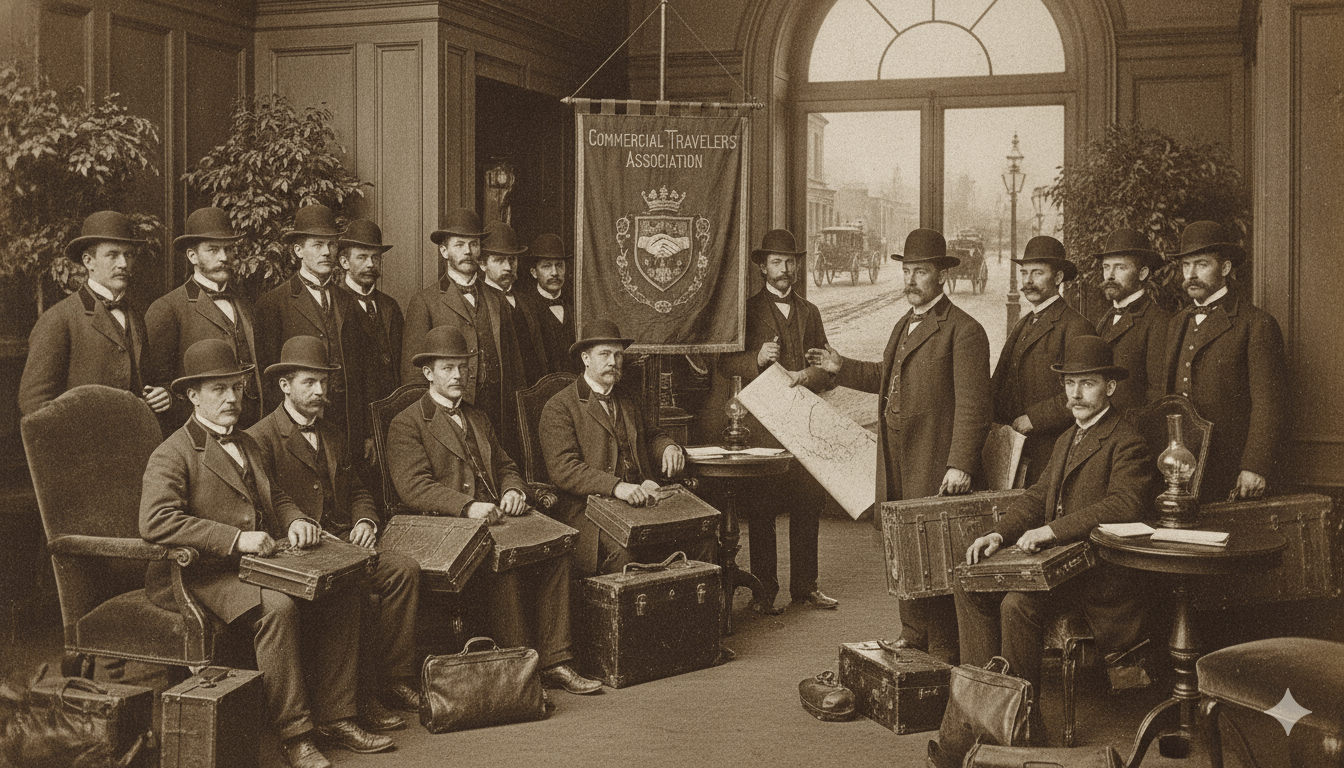
Imagine traveling thousands of miles every year for your job. You carry heavy bags of product samples. You sleep in a different hotel bed every single week. Long before airplanes and smartphones existed, thousands of people lived this exact lifestyle. They were known as commercial travelers or traveling salesmen. To survive the lonely roads and tough working conditions, these professionals joined together. They formed a powerful group called a commercial travellers association.
This kind of group acted like a shield and a community for workers on the move. It helped lonely salesmen find good food, safe housing, and fair transport prices. In this article, we will explore the history of these groups. We will look at how they changed the business world forever. We will also see how their clever ideas still affect our modern business travel today.
What Is a Commercial Travellers Association?
A commercial travellers association is a professional organization created to support traveling sales representatives. In the 19th and 20th centuries, manufacturing companies grew very quickly. These companies needed workers to visit distant towns to sell their goods. These mobile workers faced many daily challenges, like bad roads and unfair hotel prices.
By launching a commercial travellers association, the traveling salesmen gained a unified voice. The group worked like a club and a protective union rolled into one. It negotiated cheaper train tickets and better rates at local inns. It also provided a space where lonely workers could share tips about the best markets. Essentially, it turned a difficult, isolated job into a respected and organized profession.
The Early History of Traveling Salesmen
To understand the rise of the commercial travellers association, we must look back at the early days of trade. Before railroads, sales agents rode on horses or walked long distances. They carried heavy sample cases to show to shopkeepers in tiny villages. It was a very dangerous and exhausting way to make a living.
As the industrial revolution grew, trains made long-distance travel much faster. Suddenly, thousands of salesmen flooded the rail networks every day. This rapid growth created a massive need for organization. Salesmen realized that individual travelers had no power against big railway companies or greedy hotel owners. Therefore, they decided to unite and form the very first commercial travellers association groups to protect their shared interests.
Key Benefits Offered to Members
Joining a commercial travellers association came with excellent perks that made life on the road much easier. The most popular benefit was the special discount program. The group used its large membership numbers to demand cheaper fares from railway lines. This saved sales agents a lot of money on their weekly journeys.
Additionally, the association worked closely with hotels to secure clean, affordable rooms for members. Many groups even built their own private clubhouses in major cities. These buildings had comfortable lounges, cheap dining rooms, and extensive business libraries. If a member became sick or injured while working, the commercial travellers association often provided financial aid to support their family.
Commercial Travellers Association Overview
The following table outlines the core functions, historical impact, and key features of a traditional commercial travellers association.
| Feature | Historical Details & Core Functions | Modern Equivalent |
| Primary Purpose | Protecting rights and improving conditions for traveling salesmen | Modern business travel unions and corporate networks |
| Travel Perks | Discounted train tickets and guaranteed hotel rates | Corporate travel discounts, airline miles, and hotel loyalty points |
| Social Support | Private clubhouses, dining halls, and networking lounges | Co-working spaces and airport business lounges |
| Financial Aid | Insurance for sickness, injury, and funeral costs | Group health insurance and worker compensation funds |
| Industry Influence | Set high ethical standards for retail and wholesale trade | Better Business Bureau (BBB) and sales associations |
The Famous Clubhouses and Benefits
The clubhouses built by a commercial travellers association were famous for their luxury and comfort. These buildings served as a safe haven from the chaotic energy of busy city streets. Inside, a tired traveling salesman could get a hot meal, wash his clothes, and write business reports in a quiet room.
These spaces also allowed salesmen to network and build strong friendships. They exchanged valuable information about which shopkeepers paid on time and which towns to avoid. The commercial travellers association ensured that even when a salesman was far from his own family, he always had a community of peers looking out for him.
How They Changed the Hospitality Industry
The hospitality world changed drastically because of the commercial travellers association. Before these groups existed, many hotels were dirty, loud, and overpriced. The association changed the power dynamic by introducing official approval seals for lodging houses.
If a hotel wanted the lucrative business of association members, it had to keep its rooms clean and its prices fair. Hotels that treated salesmen poorly were quickly blacklisted by the commercial travellers association. This system forced the entire hospitality industry to upgrade its standards. It led to the creation of the clean, reliable business hotels we take for granted today.
The Role of Advocacy and Legal Protection
Advocacy was a major pillar of any successful commercial travellers association. These groups did not just look for cheap hotel rooms. They also fought hard in the halls of government for better labor laws. They lobbied politicians to pass regulations that protected mobile workers from unfair taxes.
In many regions, local towns tried to charge high fees to outside salesmen who came to town to do business. The commercial travellers association hired smart lawyers to fight these unfair local fees in court. By defending the legal rights of salesmen, the association helped create a smoother, freer system of national trade.
Education and Professional Standards
Maintaining high ethical standards was very important to the commercial travellers association. In the early days, some rogue salesmen used deceptive tricks to sell low-quality goods. This dishonest behavior gave the whole profession a bad reputation. The association worked hard to fix this image problem.
To build trust with the public, the commercial travellers association created a strict code of ethics. Members who lied to customers or cheated store owners were quickly expelled from the group. The association also offered training classes. These lessons taught young salesmen how to communicate honestly, present products professionally, and manage their business finances wisely.
The Decline of the Traditional Model
As the 20th century progressed, the world changed, and the traditional commercial travellers association began to face tough times. The invention of the automobile allowed salesmen to drive straight home instead of staying in hotels. Later, the rise of telephones and the internet meant companies could sell goods without sending a person door-to-door.
Because of these new technologies, the massive army of traveling rail salesmen slowly disappeared. Many historic clubhouses were sold or turned into museums. However, the core spirit of the commercial travellers association did not die. It simply evolved into modern corporate travel management groups and digital sales networks that we use today.
The Lasting Legacy in Modern Business
The modern business world owes a huge debt to the early commercial travellers association. The concept of business travel rewards, like frequent flyer miles and hotel points, started with these historical groups. They proved that frequent travelers deserve special rewards and protections.
Furthermore, the focus on building community among remote workers is more popular now than ever. Today’s digital nomads use co-working spaces that look and feel just like the old commercial travellers association clubhouses. The group showed the world that mobile workers are highly productive when they are given proper respect, safety, and comfort.
Conclusion: A Model of Worker Unity
In conclusion, the commercial travellers association was a true pioneer in the history of modern business. It took thousands of isolated, overworked salesmen and turned them into a powerful, respected community. By fighting for cheaper travel, better hotels, and fair laws, they shaped our modern economy.
Their story teaches us that workers are always stronger when they stand together. Whether you are a historic salesman carrying a heavy sample wooden box or a modern remote worker typing on a laptop, the need for community remains the same. The legacy of the commercial travellers association reminds us to always value and protect the people who travel to keep our businesses moving forward.
Frequently Asked Questions
What was the main goal of a commercial travellers association?
The main goal was to protect and support traveling salesmen. The group used its collective power to secure cheaper train tickets, find clean hotel rooms, and fight against unfair local business taxes.
When were these associations most popular?
These groups were incredibly popular during the late 19th century and the early 20th century. This was the golden age of rail travel, when manufacturing companies relied heavily on traveling agents to sell goods nationwide.
Did a commercial travellers association offer insurance?
Yes, most associations offered great benefits like sickness, accident, and funeral insurance. If a member fell ill on the road, the group provided money to help pay for medical care and support their family.
What inside facilities did their clubhouses have?
The clubhouses featured comfortable bedrooms, affordable dining rooms, writing desks, and private libraries. They gave traveling members a safe, quiet place to rest, do paperwork, and socialize with other salesmen.
How did these associations affect modern hotels?
They forced hotels to raise their cleanliness and service standards. By recommending good hotels and blacklisting bad ones, the association created the foundations for modern, reliable business travel hospitality.